Every Day is a Yay! Day
Homeโ€บLearning Hubโ€บRivers
๐ŸŒ Geography

Rivers

๐ŸŒ Geography KS2 โ€” Ages 7โ€“11 โœ“ 3 key facts
๐Ÿž๏ธ

โญ Key Facts

1 Rivers begin at a source (usually high ground) and end where they meet the sea or a lake โ€” called the mouth.
2 The area of land drained by a river and its tributaries is called a river basin or catchment area.
3 Rivers shape the landscape by eroding rock and soil and depositing material further downstream.
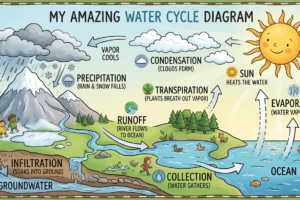
Find out how rivers form, flow and shape the landscape around them.

Rivers are flowing bodies of fresh water that play a vital role in shaping our landscape and supporting life. Every river starts at a source โ€” usually high ground such as hills or mountains โ€” where rainfall, melting snow or springs provide water. From there, the river flows downhill, often getting wider and deeper as smaller streams called tributaries join it. The point where a river reaches the sea or a large lake is called the mouth. Along the way, rivers erode (wear away) rock and soil, carve out valleys, and transport material. Where the water slows down, this material is deposited, building up features like flood plains and deltas. Rivers have been central to human civilisation โ€” people have settled beside them for thousands of years because they provide fresh water, fertile land and transport routes. The River Thames, Severn and Trent are among the UK’s most important rivers.

โ† Learning Hub