Discover how erupting mountains destroy landscapes while creating the most fertile soil on our planet.
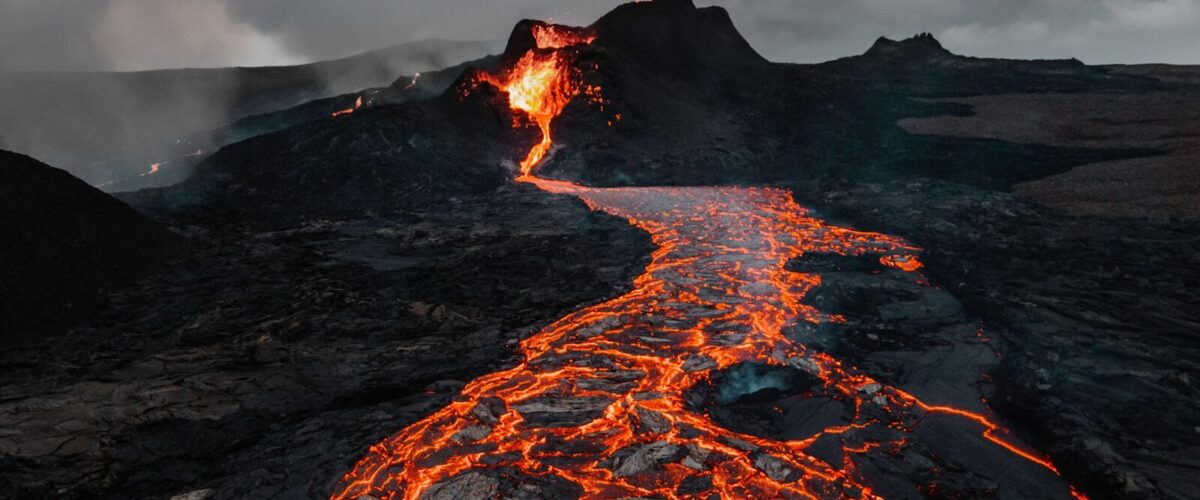
Deep beneath our feet, the Earth is so hot that rocks melt into a thick liquid called magma. When this magma finds a weak spot in the Earth’s crust (the hard outer layer), it forces its way up. This creates an eruption. While we often think of explosive eruptions with giant clouds of ash, some volcanoes simply have ‘effusive’ (runny and slow) lava flows that crawl across the land.
Volcanoes are famous for being dangerous. They can produce pyroclastic flows (fast-moving clouds of hot gas and ash) that destroy everything in their path. However, they are also very useful to the planet. Over millions of years, volcanic ash breaks down into extremely fertile soil. This is why many people choose to live near volcanoes to grow food. They also provide geothermal energy (heat from the Earth) which can be used to create electricity without burning fossil fuels.
Did you know that Jersey has a volcanic past? Millions of years ago, the area around Trinity and St Martin was shaped by volcanic activity. If you look at the rocks at Bouley Bay, you are actually looking at ancient ‘rhyolite’ which was formed from thick, sticky lava. Don’t worry, though—Jersey’s volcanoes have been extinct (dead and unable to erupt) for a very long time!